
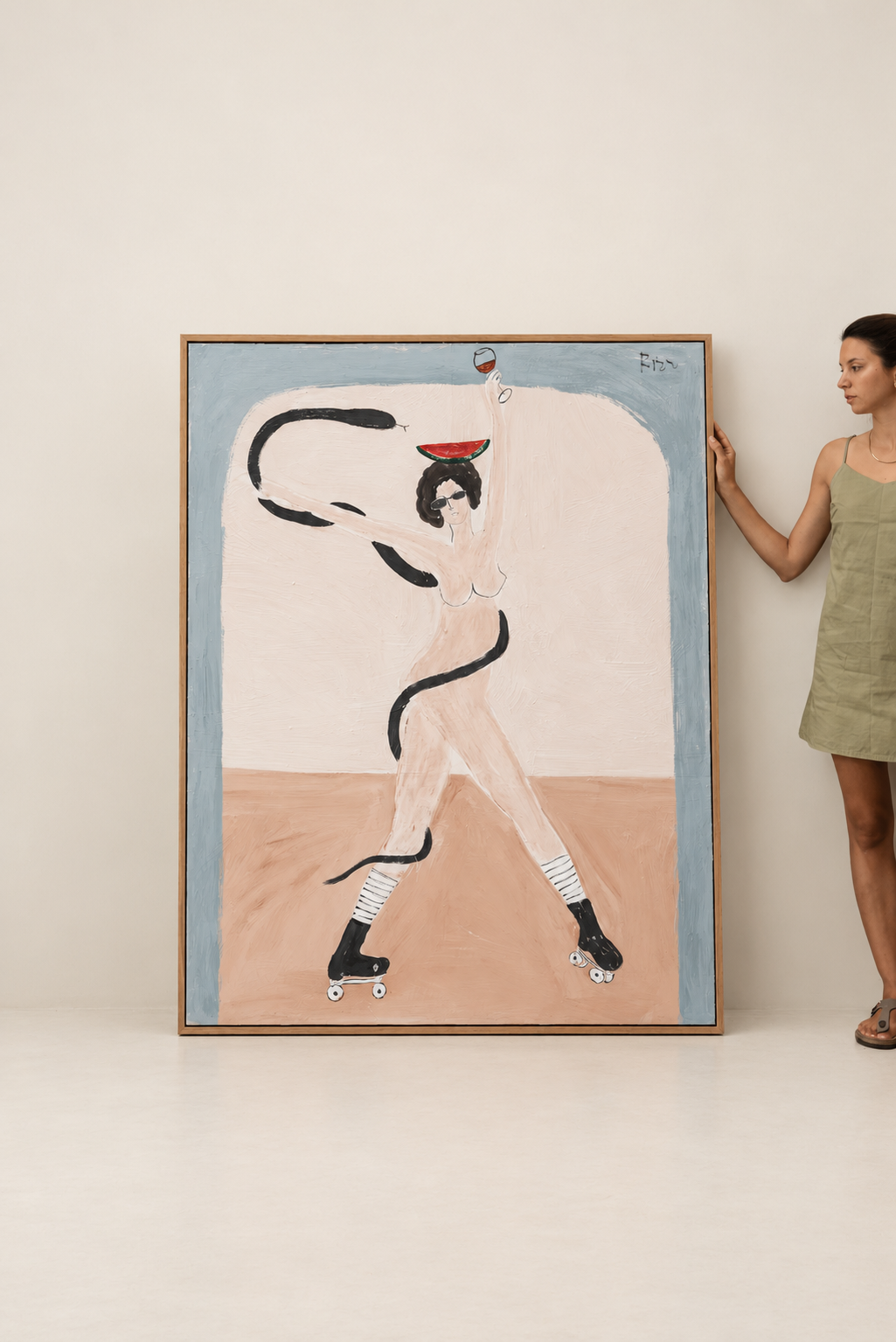
A beautifully furnished room can catch your eye, but it's often the artwork that makes you want to stay a little longer.
A painting that draws you in, a print that makes you smile, or a piece that means something entirely different to you than it does to anyone else — art brings a layer of personality to a home that furniture alone can't quite achieve.
And the best part? There are no rules about what you should love.
Whether you're drawn to expressive paintings, unexpected imagery or quieter pieces that reveal more the longer you look, choosing artwork is an opportunity to make your home feel unmistakably yours.
At Amier Home, we believe art should do more than fill an empty wall. It should start a conversation, create a mood and give a room something to say.
Start With What Speaks to You
Choosing artwork can feel surprisingly intimidating. There are questions about colour, scale, framing and whether a piece will work with the rest of the room. But before getting caught up in the details, start with a simpler question: Do I love it?
Art doesn't need to match your cushions, coordinate perfectly with your sofa or fit neatly into a particular colour palette. In fact, a piece that introduces an unexpected colour or challenges the mood of a room can be exactly what the space needs.
Consider the expressive work of Rizz, whose paintings draw on memory, nostalgia, figurative imagery and symbolism. His work brings together subjects including women, animals, flowers and meaningful objects, with an expressive approach that balances emotion, drama and humour.
His prints offer an opportunity to introduce artwork with a strong visual identity and a story of its own.
Explore pieces such as Mystical Love Print by Rizz, where striking imagery and an emotional narrative create a piece that invites a closer look.
The point isn't to find art that matches your home perfectly. It's to find something you want to live with.
Make a Statement, Even With One Piece
Not every wall needs a gallery of frames. Sometimes, a single artwork with the right scale and presence can do all the talking.
A large painting above a sofa can anchor an entire living room, while a striking piece in an entryway creates an immediate impression. In a bedroom, artwork can introduce a different mood, making the space feel more considered and personal.
The key is proportion.
A small artwork can disappear on a large, empty wall, while an oversized piece can feel overwhelming if there isn't enough breathing room around it. Consider the width of the furniture beneath it, the height of the ceiling and how the artwork relates to the surrounding architecture.
Amier Home's collection includes works by Natasha Bakhshov, whose paintings offer another way to introduce art into a space. Explore titles such as Lost in Time, Wrong Place, Right Time and I've Been Here Before through the artwork collection.
Whether you gravitate towards a large statement painting or a smaller, more intimate piece, think about the feeling you want the artwork to create before deciding where it belongs.
The Case for Mixing Art Styles
Your artwork collection doesn't need to look as though it was purchased in one afternoon.
Some of the most interesting interiors combine different artistic styles, eras, subjects and frames. A contemporary print can sit alongside a more expressive painting, while a quieter piece can balance something with a little more drama.
The secret is finding a relationship between the works rather than insisting they all look alike.
You might connect different pieces through a shared colour, a similar subject or simply the feeling they evoke. Alternatively, you can embrace contrast and let each artwork bring its own personality to the room.
Amier Home's collection of prints by Rizz is a good place to explore this idea. From Sweet Feeling to Wildest Dream and Surf With The Tiger, the works offer different visual narratives to consider when building a collection.
You don't need every piece to tell the same story. Sometimes, the contrast is what makes the arrangement interesting.
Beyond the Living Room
Artwork has a habit of being reserved for the main living area, as though the rest of the house doesn't deserve it.
But some of the most rewarding places to introduce art are the spaces you move through every day.
In the entryway, a distinctive print or painting can establish the mood of your home before anyone reaches the living room.
In the bedroom, artwork above the bed or on a quieter wall can make the space feel more personal. Choose something you enjoy waking up to, whether that's expressive, calming or a little unexpected.
In the dining room, a larger piece can become a natural focal point, giving the room character beyond the table and chairs.
In smaller spaces, don't overlook a narrow hallway, a reading corner or the wall beside a console. These areas can be ideal for introducing artwork without competing with larger furniture arrangements.
And if you have a room that feels almost finished but somehow lacks personality, artwork might be the missing piece.
Let the Artwork Lead the Room
It's tempting to choose all the furniture first and then search for art that fits whatever is left. But sometimes, reversing the process creates a much more interesting result.
Start with a painting or print you love, then allow its colours, shapes or mood to influence the rest of the room.
A piece with earthy tones might inspire the timber finishes and natural textures around it. More expressive artwork could sit beautifully against understated furniture, allowing the colours and composition to take centre stage.
Alternatively, a restrained interior can be the perfect setting for a piece that feels bold, unexpected or slightly unconventional.
There's no need to recreate the artwork's colours throughout the room. A subtle connection through a cushion, a vase or a decorative object may be enough.
The goal is to create a conversation between the artwork and its surroundings, not to make everything match.
Build a Collection Over Time
One of the nicest things about collecting art is that it doesn't have to happen all at once.
You might begin with a print that catches your attention, discover an artist whose work you connect with, and gradually add pieces that reflect different moments, places or interests. Over time, the collection becomes a record of your evolving taste.
Don't worry about filling every wall immediately. Living with a piece can help you understand what you want next, and leaving space for something you'll discover later is part of the process.
You can also experiment with placement before committing to a final arrangement. Consider how a work looks in different lighting, how it relates to nearby furniture and whether it has enough space to be appreciated on its own.
And remember that collecting art isn't about following a formula. It's about surrounding yourself with things that continue to interest you long after the initial purchase.
A Home That Feels Like You
Artwork brings something wonderfully individual to an interior. It can introduce colour where there was none, soften a space that feels too restrained, or create a focal point that draws everything together.
But perhaps its greatest quality is that it doesn't need to be practical, match anything or serve a particular purpose. It simply needs to mean something to you.
From the expressive prints of Rizz to the paintings of Natasha Bakhshov, Amier Home's artwork collection offers pieces to explore, live with and make your own.
So the next time you look at an empty wall, don't think of it as a space that needs filling. Think of it as an opportunity to find something you'll love looking at every day.
Discover the Amier Home artwork collection and find a piece that tells your story.