
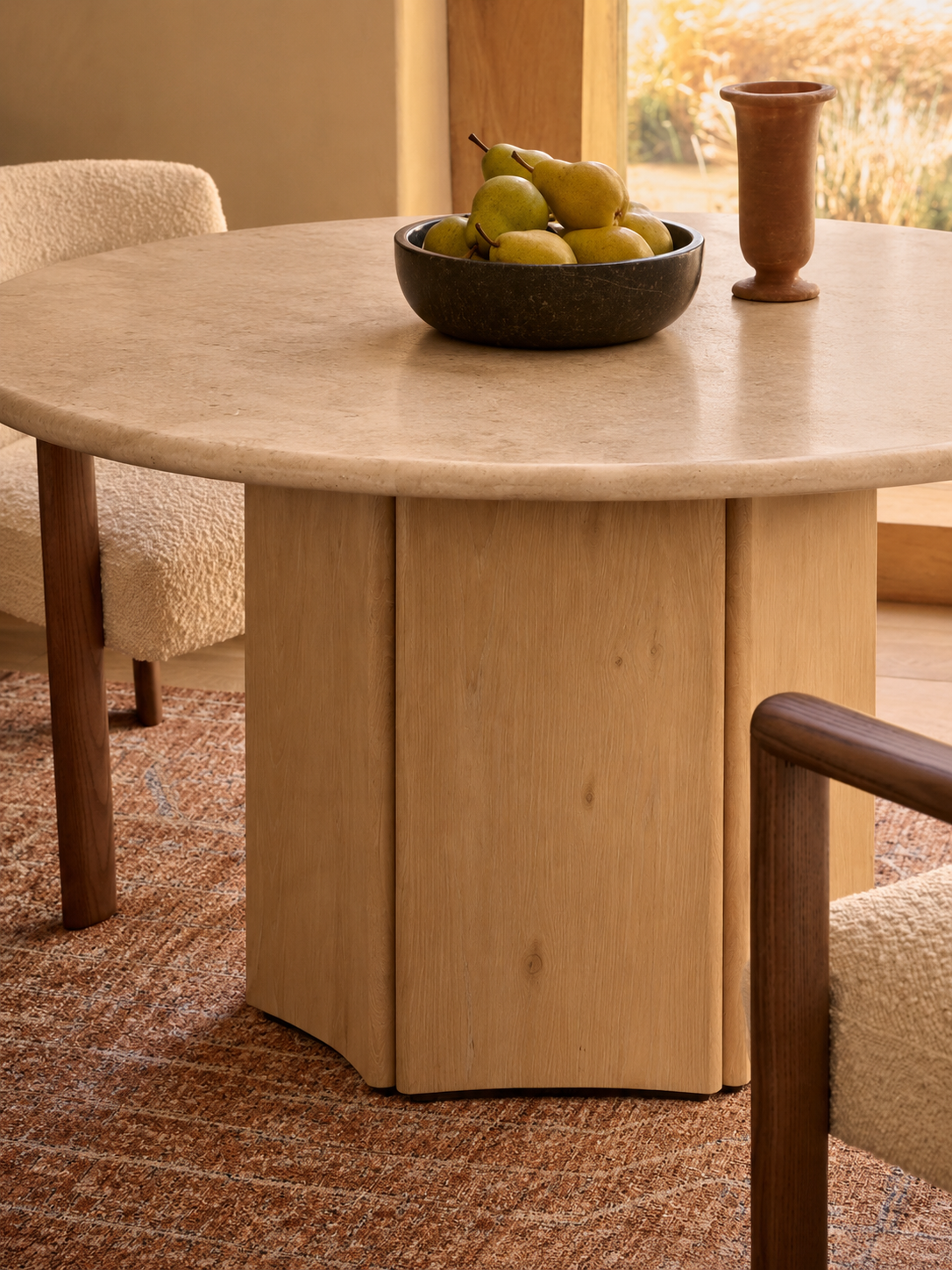
When investing in furniture, the materials used to create a piece are just as important as its design. From the natural character of solid timber to the versatility of wood veneer and the practicality of engineered wood, each material offers something different.
But what exactly separates them? And how do you know which is right for your home?
At Amier Home, we believe understanding the materials behind your furniture allows you to make more considered choices. Here's our guide to the three commonly used materials and what you should know before investing in your next piece.
1. Solid Timber: The Beauty of Natural Wood
Solid timber is exactly what it sounds like: furniture constructed from natural wood, rather than a manufactured wood-based core covered with another material.
Each piece of timber has its own distinctive grain, colour variations and natural markings. These characteristics give solid timber furniture an individuality that is difficult to replicate.
Why choose solid timber?
-
Natural character: Every piece has its own grain patterns, knots and tonal variations.
-
Longevity: Well-constructed solid timber furniture can last for generations when properly maintained.
-
Repairability: Depending on the timber and finish, surfaces can often be sanded, refinished or repaired over time.
-
Timeless appeal: Natural timber works beautifully across a variety of interior styles and tends to age with character.
Things to consider
Solid timber responds naturally to its environment. Changes in temperature and humidity can cause timber to expand, contract or develop small cracks over time. This is a normal characteristic of natural wood.
It can also be more expensive than other furniture materials, depending on the timber species, construction and craftsmanship involved.
Solid timber is particularly suited to pieces you want to keep for years, such as dining tables, coffee tables, benches and statement furniture.
2. Wood Veneer: Natural Beauty With Design Versatility
Wood veneer is made by slicing thin layers of real timber and applying them to a supporting material, such as MDF or plywood.
Because the outer layer is genuine timber, veneer retains the natural grain, texture and appearance of the wood species used.
It is often misunderstood as an inferior alternative to solid timber, but this isn't necessarily the case. High-quality veneer is a considered material in its own right and is widely used in contemporary furniture design.
Why choose wood veneer?
-
Natural appearance: The surface is real timber, showcasing authentic wood grain.
-
Design flexibility: Veneer allows designers to create curved forms, intricate patterns and larger uninterrupted surfaces.
-
Consistency: Carefully selected veneer sheets can create a more uniform appearance across a furniture piece.
-
Resource efficiency: Thin timber layers allow more surface coverage from each log compared with constructing the same surface entirely from solid timber.
-
Stability: When correctly manufactured, the supporting core and balanced veneer construction can help minimise movement compared with a solid timber panel.
Things to consider
Veneer surfaces are generally thinner than solid timber, so they cannot usually be sanded and refinished repeatedly. Deep scratches or damage may require specialist repairs.
The quality of veneer furniture also depends heavily on the supporting material, adhesives, edge finishing and overall construction.
When well made, veneer furniture can be both beautiful and durable, offering the appearance of natural timber with greater design flexibility.
3. Engineered Wood: Practicality and Modern Construction
Engineered wood is a broad term used to describe manufactured wood-based materials created by combining wood fibres, particles or layers with adhesives under controlled conditions.
Unlike solid timber, engineered wood is manufactured to achieve particular performance and design characteristics.
Some of the most common types include:
MDF (Medium-Density Fibreboard)
Made from fine wood fibres combined with resin and compressed under heat and pressure. MDF has a smooth, consistent surface, making it particularly suitable for painted finishes and detailed furniture designs.
Plywood
Constructed from multiple thin layers of wood veneer bonded together, with the grain direction alternating between layers. This cross-layer construction gives plywood good structural strength and dimensional stability.
Particleboard
Made from wood particles bonded together with resin and compressed into panels. It is commonly used in furniture manufacturing, often with a decorative laminate or veneer surface.
Why choose engineered wood?
-
Consistency: Manufactured panels offer a uniform surface without the natural variations found in solid timber.
-
Design flexibility: They can be cut, shaped and finished to suit a wide range of furniture designs.
-
Stability: Many engineered wood products are designed to minimise movement and maintain their shape.
-
Versatility: Different types offer different strengths, finishes and price points.
Things to consider
Not all engineered wood is created equally. Its durability depends on the material, density, construction quality and how well it is protected from moisture.
Some products can swell or deteriorate if exposed to water, and damaged surfaces can be difficult to repair.
The quality of the hardware, joints, edges and overall assembly also plays an important role in how long the furniture will last.
So, Which Material Is Best?
There isn't one universal answer. The right choice depends on the intended use, design, budget and the qualities you value most.
Here's a simple comparison:
| Material | Main advantage | Consideration |
|---|---|---|
| Solid timber | Natural character and repairability | Can move with environmental changes |
| Wood veneer | Real timber appearance and design flexibility | Surface repairs can be more difficult |
| Engineered wood | Versatility and consistent construction | Quality varies between products |
For dining tables and frequently used furniture, construction quality and the suitability of the material are particularly important.
For sculptural furniture and pieces with distinctive shapes, veneer and engineered wood can offer design possibilities that would be difficult to achieve using solid timber alone.
Ultimately, a beautifully made piece is about more than the material itself. Good design, thoughtful construction and quality craftsmanship all contribute to its longevity.
What Should You Look for When Buying Furniture?
Before purchasing a piece, it's worth considering a few things:
1. Understand the construction
Ask whether the furniture is made entirely from solid timber, features a timber veneer or uses an engineered wood core. A combination of materials is common in furniture manufacturing.
2. Consider how you'll use it
A dining table, bedside table and decorative console all have different practical requirements. Think about everyday use, weight, wear and exposure to moisture.
3. Look beyond the surface
Pay attention to the joints, edges, hardware, supporting structure and finish. These details can tell you a lot about the overall quality of a piece.
4. Think about longevity
Consider whether the material and finish will suit your lifestyle and whether the furniture can be maintained or repaired over time.
5. Ask questions
A good furniture retailer should be able to tell you what a piece is made from, how it has been constructed and how best to care for it.
Choosing Furniture With Intention
At Amier Home, we believe beautiful furniture begins with thoughtful design and an appreciation for materials.
Whether it's the individuality of solid timber, the natural finish of wood veneer or the versatility of engineered wood, each material has its own qualities and place within furniture design.
Understanding these differences allows you to look beyond appearances and choose pieces that feel right for your home, your lifestyle and the way you want to live.
Because the best furniture isn't simply about how it looks today. It's about choosing pieces you'll enjoy living with for years to come.
Discover considered furniture and timeless design at Amier Home.